The Best 4K Projectors Overall in 2026, Tested by Spec Sheet...
We compared live Amazon prices, ratings, and brightness/contrast specs across five current 4K projectors to find the best overall home theater pick for 2026.

We independently evaluate every product. Some links are affiliate links -- if you purchase through them, we earn a small commission at no extra cost to you. Full disclosure
Key facts
| Products compared | 5 projectors products, 1,857 verified buyer reviews behind the ratings |
|---|---|
| Price range | $899 to $4400 |
| Top pick | Epson Home Cinema 4010 4K PRO-UHD 3-Chip 3LCD Projector (Epson, $2,499) |
| Best value | Optoma UHD50X True 4K UHD Projector ($1,322) |
| Last updated | ; prices and availability checked September 5, 2026 |
| Sources | Manufacturer spec sheets and Amazon product listings for each item, linked in the detailed reviews below; ratings are the listing's verified-purchase average at the check date. |
Our Top Picks
Quick recommendations if you're in a hurry
Epson Home Cinema LS11000 4K PRO-UHD Laser Projector
Epson · $4,399.99
Buyers who want the brightest, sharpest laser image and don't mind the 4K/8K price tag
See price at AmazonEpson Home Cinema 4010 4K PRO-UHD 3-Chip 3LCD Projector
Epson · $2,499
Buyers who want Epson's 3-chip color accuracy without paying laser prices
See price at AmazonOptoma UHD50X True 4K UHD Projector
Optoma · $1,322
Buyers who want true 4K UHD and gaming-friendly response time at a mid-range price
See price at AmazonThe hunt for the best 4K projector overall in 2026 lands on a handful of models that balance image quality, light source technology, and price points you’ll actually see on Amazon today. After pulling the latest spec sheets, confirming every price on the product pages on 2026-09-05, and cross-checking brightness standards with the Consumer Technology Association’s ANSI/CTA-2049 methodology, we found that the Epson Home Cinema LS11000 laser projector delivers the most capable image but comes at a premium, while the XGIMI Horizon Pro offers a budget-friendly entry into 4K with built-in audio. Between them sit solid mid-range choices from Epson, Optoma, and AWOL VISION that cater to gamers, ultra-short-throw enthusiasts, and anyone who wants a 3-chip 3LCD engine without breaking the bank. In short, you can match a projector to your room size, lighting conditions, and wallet without sacrificing true-4K performance.
How We Chose the Winners
Our selection process started with a spec-sheet comparison of every projector that advertised 4K resolution (whether native or pixel-shifted) on Amazon in early September 2026. We verified each price on the retailer’s page on 2026-09-05 and recorded the manufacturer-listed brightness, light source, HDR support, and connectivity. To keep the list manageable, we limited ourselves to five models that represented the major light-source categories, laser, lamp, and DLP-based designs, while also covering a range of price tiers.
We weighted three core criteria:
- Image fidelity - resolution, HDR formats, and the presence of a 3-chip 3LCD engine (which avoids the rainbow effect sometimes seen in single-chip DLP units) were given top priority.
- Brightness - measured in ANSI or ISO lumens, both tracked by the CTA’s lumens-measurement standard CTA. Higher lumens translate to more flexibility in ambient light.
- User feedback - average customer rating and review count from Amazon were used to gauge real-world satisfaction, with higher-rated units receiving a boost.
We also consulted independent lab methodology from RTINGS to understand how brightness, contrast, and input lag are typically benchmarked across brands RTINGS. For the pixel-shift DLP technology used by several models, we referenced Wikipedia’s explanation of how a lower-resolution chip can still deliver 4K output Wikipedia.
Epson Home Cinema LS11000 4K PRO-UHD Laser Projector
Who it’s for: Buyers who demand the brightest, sharpest laser image and are comfortable investing in a premium-class home-theater system.
Why it stands out: The LS11000 pairs a 3-chip 3LCD laser engine with HDMI 2.1 and a motorized lens-shift, focus, and zoom system, making installation straightforward even on a ceiling mount. Its 2,500-lumen color and white brightness rating is respectable for a laser unit, and the laser light source is rated for tens of thousands of hours with no bulb replacement needed. HDR10 and HDR10+ support add richer contrast in compatible content.
What could be better: At $4,399.99, it is the most expensive option in this guide, and its 2,500-lumen output is lower than the brighter DLP models, meaning a darker viewing environment is advisable.
Verdict: The LS11000 is the most capable projector in this comparison, pairing a 3-chip 3LCD laser engine with HDMI 2.1 and motorized lens controls, at the highest price of the group.
Epson Home Cinema 4010 4K PRO-UHD 3-Chip 3LCD Projector
Who it’s for: Buyers who want Epson’s renowned 3-chip color accuracy without the laser price tag.
Why it stands out: The HC4010 delivers the same 3-chip 3LCD pixel-shifting 4K approach as the LS11000 but uses a replaceable lamp. It carries the highest average customer rating of the five at 4.5 stars from 291 reviews, indicating strong satisfaction. HDR processing is tuned specifically for movie content, and its 2,400-lumen brightness is adequate for a dimmed home theater.
What could be better: The lamp will eventually need replacement, adding long-term maintenance cost. Its 2,400-lumen rating also prefers a darker room compared with the brighter DLP options.
Verdict: The HC4010 offers the same 3-chip 3LCD pixel-shifting 4K approach as Epson’s laser models at roughly half the LS11000’s price, with the highest customer rating of the five.
Optoma UHD50X True 4K UHD Projector
Who it’s for: Gamers and budget-conscious cinephiles who want true 4K UHD and a high refresh rate without paying for a laser engine.
Why it stands out: The UHD50X shines with a 3,400-lumen brightness, one of the highest in this lineup, making it more tolerant of ambient light. Its 240 Hz refresh rate and 16 ms input lag in Enhanced Gaming Mode provide a fluid gaming experience. At $1,322 it undercuts the 3-chip models while still delivering a bright DLP image.
What could be better: The single-chip DLP design can exhibit the rainbow artifact that 3-chip 3LCD units avoid, and its 3.7-star average is the second-lowest of the five, reflecting mixed user sentiment.
Verdict: The UHD50X undercuts the 3-chip models here on price while still offering a bright 3,400-lumen DLP image and a 240 Hz refresh mode for gaming.
AWOL VISION LTV-3000 Pro 4K UST Triple Laser Projector
Who it’s for: Home-theater enthusiasts who prefer an ultra-short-throw (UST) setup that sits on a console rather than a ceiling mount, and who want a flagship-style laser system.
Why it stands out: The LTV-3000 Pro uses a triple-laser light source that covers a wider color gamut than lamp or single-laser designs, and it supports Dolby Vision, Dolby Atmos, and HDR10+. Its 4.5-star rating from 198 reviews is the highest customer rating in this guide. Because it throws a 150-inch image from a few inches away, it eliminates the need for a long-throw ceiling mount.
What could be better: Installation requires a compatible ALR screen and a short-throw layout, which can add to overall system cost. Native contrast and lumens are not directly comparable to the long-throw specs listed for other models.
Verdict: The LTV-3000 Pro swaps a traditional throw distance for an ultra short-throw triple-laser design that sits on a console below the screen, at a similar price to the HC4010.
XGIMI Horizon Pro 4K Projector
Who it’s for: First-time 4K buyers who want the lowest entry price, built-in smart TV functionality, and integrated audio.
Why it stands out: At $899, the Horizon Pro is the most affordable option and carries the largest review sample, 747 ratings with an average of 4 stars. Android TV 10.0 provides a full smart-platform experience, and Harman Kardon speakers eliminate the need for a separate sound system.
What could be better: Its 1,500 ISO lumens is the dimmest brightness spec of the five, meaning a dark room is essential for optimal performance. The 4K resolution is achieved via pixel-shift rather than a native 4K chip, which is common across all models in this guide.
Verdict: The Horizon Pro is the least expensive projector in this comparison and carries by far the largest review count, making it the safest budget bet even though it is the dimmest.
Comparison at a Glance
| Model | Light Source | Resolution (pixel-shift) | Brightness | HDR Support | Avg. Rating | Price |
|---|---|---|---|---|---|---|
| Epson LS11000 | Laser (3-chip 3LCD) | 3840×2160 (PRO-UHD) | 2,500 lumens | HDR10, HDR10+ | 4.3 ★ (131) | $4,399.99 |
| Epson HC4010 | Lamp (3-chip 3LCD) | 3840×2160 (PRO-UHD) | 2,400 lumens | HDR processing | 4.5 ★ (291) | $2,499 |
| Optoma UHD50X | Single-chip DLP | 3840×2160 (True 4K) | 3,400 lumens | HDR10, HLG | 3.7 ★ (490) | $1,322 |
| AWOL VISION LTV-3000 | Triple Laser (UST) | 3840×2160 (4K UHD) | , (UST spec) | Dolby Vision, Dolby Atmos, HDR10+ | 4.5 ★ (198) | $1,899 |
| XGIMI Horizon Pro | LED/Lamp hybrid | 3840×2160 (pixel-shift) | 1,500 ISO lumens | , | 4 ★ (747) | $899 |
Brightness numbers are reported in ANSI or ISO lumens, both tracked by the CTA’s measurement standards CTA.
Light-Source Differences: Laser vs. Lamp
- Laser projectors (LS11000, LTV-3000) use solid-state light engines that can run for tens of thousands of hours without a bulb replacement, offering consistent color performance over time. They typically produce a wider color gamut and maintain brightness longer as the unit ages.
- Lamp-based projectors (HC4010) rely on a replaceable bulb that degrades, meaning brightness will drop over the lamp’s lifespan and the user must budget for future replacements. Lamps are generally cheaper up-front but add long-term cost.
- LED/Hybrid units like the Horizon Pro use a combination of LED and lamp technologies, delivering lower brightness but very low power consumption and long life.
Native 4K vs. Pixel-Shifted 4K
All five projectors in this guide use pixel-shifting technology, either DLP or 3LCD, to display a 3840×2160 image from a lower-resolution chip. According to Wikipedia, pixel-shifted DLP can produce a full 4K picture by rapidly moving the chip’s image sub-pixels between frames Wikipedia. While a native 4K chip would theoretically offer the purest pixel-perfect image, pixel-shifted 4K is the industry standard for consumer-grade projectors and delivers results that are indistinguishable to most viewers, especially at typical home-theater screen sizes.
How Many Lumens Do You Need?
- Dedicated dark home theater - 1,500-2,500 lumens (ISO or ANSI) is sufficient. The Horizon Pro (1,500 ISO) and Epson HC4010 (2,400 ANSI) fit well here.
- Light-controlled living room - 2,500-3,500 lumens give flexibility for some ambient light. The LS11000 (2,500 ANSI) and Optoma UHD50X (3,400 ANSI) are solid choices.
- Bright multi-use spaces - 3,500 lumens or more is ideal, but none of the models exceed 3,400 lumens. In such environments, a higher-gain screen or blackout curtains become essential.
Answering Your Top Questions
1. What’s the real difference between a laser and a lamp-based 4K projector?
Laser units provide a longer lifespan, stable brightness over time, and a broader color gamut, but they come at a higher upfront cost. Lamp-based models are cheaper initially but require periodic bulb replacements and may see a gradual dimming of output. For users who want “set it and forget it,” laser is the clear winner; for those on a tighter budget who don’t mind occasional maintenance, lamp models remain viable.
2. Do I need native 4K or is pixel-shifted 4K good enough?
Pixel-shifted 4K, as used by every projector here, delivers a full 3840×2160 image that satisfies the vast majority of home-theater viewers. The only scenario where native 4K would be a decisive advantage is in professional or commercial installations where pixel-perfect accuracy is critical. For typical movie watching, gaming, or streaming, pixel-shifted 4K offers excellent sharpness and detail.
3. How many lumens do I need for a dedicated home theater room?
If you can control ambient light (dark curtains, blackout shades), 1,500-2,500 lumens will provide a vibrant image with deep blacks. For rooms with some light bleed or where you plan to watch during the day, aim for 2,500-3,500 lumens. The Optoma UHD50X’s 3,400 lumens makes it the most forgiving of the lot in brighter settings, while the Horizon Pro’s 1,500 ISO lumens works best in a fully dark environment.
What We Would Buy
If we had to pick a single model that balances performance, future-proofing, and price, the Epson Home Cinema 4010 lands near the top of our list. It delivers the same 3-chip 3LCD pixel-shifting 4K engine as the premium laser LS11000, enjoys the highest customer rating, and sits at a price point that many enthusiasts consider a sweet spot for serious home-theater builds. For gamers who need ultra-fast refresh rates, the Optoma UHD50X offers a compelling alternative with its 240 Hz mode and high brightness. Finally, for anyone stepping into 4K for the first time, the XGIMI Horizon Pro provides a safe, budget-friendly entry with built-in Android TV and Harman Kardon audio.
Related Reading
Detailed Reviews

Epson Home Cinema LS11000 4K PRO-UHD Laser Projector
Epson · $4,399.99
4.3 (131 reviews)
Buyers who want the brightest, sharpest laser image and don't mind the 4K/8K price tag
What We Like
- Laser light source rated for tens of thousands of hours with no bulb to replace
- 3-chip 3LCD design avoids single-chip DLP rainbow artifacts
- Motorized lens shift, focus, and zoom simplify installation
Could Be Better
- Highest price of the five projectors compared here at $4,399.99
- 2,500-lumen rating is lower than several cheaper DLP models here, so a darker room helps
Key Specs
The LS11000 is the most capable projector in this comparison, pairing a 3-chip 3LCD laser engine with HDMI 2.1 and motorized lens controls, at the highest price of the group.
See price at Amazon
Epson Home Cinema 4010 4K PRO-UHD 3-Chip 3LCD Projector
Epson · $2,499
4.5 (291 reviews)
Buyers who want Epson's 3-chip color accuracy without paying laser prices
What We Like
- Highest average customer rating of the five at 4.5 out of 5 from 291 ratings
- 3-chip 3LCD design avoids rainbow artifacts some single-chip DLP units show
- HDR processing tuned specifically for movie content
Could Be Better
- Uses a replaceable lamp rather than laser or LED
- 2,400-lumen rating wants a dimmer room than the brighter DLP models here
Key Specs
The HC4010 offers the same 3-chip 3LCD pixel-shifting 4K approach as Epson's laser models at roughly half the LS11000's price, with the highest customer rating of the five.
See price at Amazon
Optoma UHD50X True 4K UHD Projector
Optoma · $1,322
3.7 (490 reviews)
Buyers who want true 4K UHD and gaming-friendly response time at a mid-range price
What We Like
- 3,400-lumen brightness among the highest in this comparison
- 240Hz refresh rate and 16ms response time suit gaming
- Lower price than the laser and 3-chip options in this list
Could Be Better
- 3.7-star average is the second-lowest of the five, from 490 ratings
- Single-chip DLP design rather than 3-chip
Key Specs
The UHD50X undercuts the 3-chip models here on price while still offering a bright 3,400-lumen DLP image and a 240Hz refresh mode for gaming.
See price at Amazon
AWOL VISION LTV-3000 Pro 4K UST Triple Laser Projector
AWOL VISION · $1,899
4.5 (198 reviews)
Buyers who want a flagship-style laser projector without a ceiling mount
What We Like
- Triple-laser light source covers a wider color range than lamp or single-laser designs
- 4.5-star average, the highest customer rating in this comparison at 198 ratings
- No ceiling mount or long throw distance required
Could Be Better
- Requires a compatible ALR screen and short-throw setup, which adds cost
- Native contrast and lumens are not directly comparable to long-throw specs
Key Specs
The LTV-3000 Pro swaps a traditional throw distance for an ultra short throw triple-laser design that sits on a console below the screen, at a similar price to the HC4010.
See price at Amazon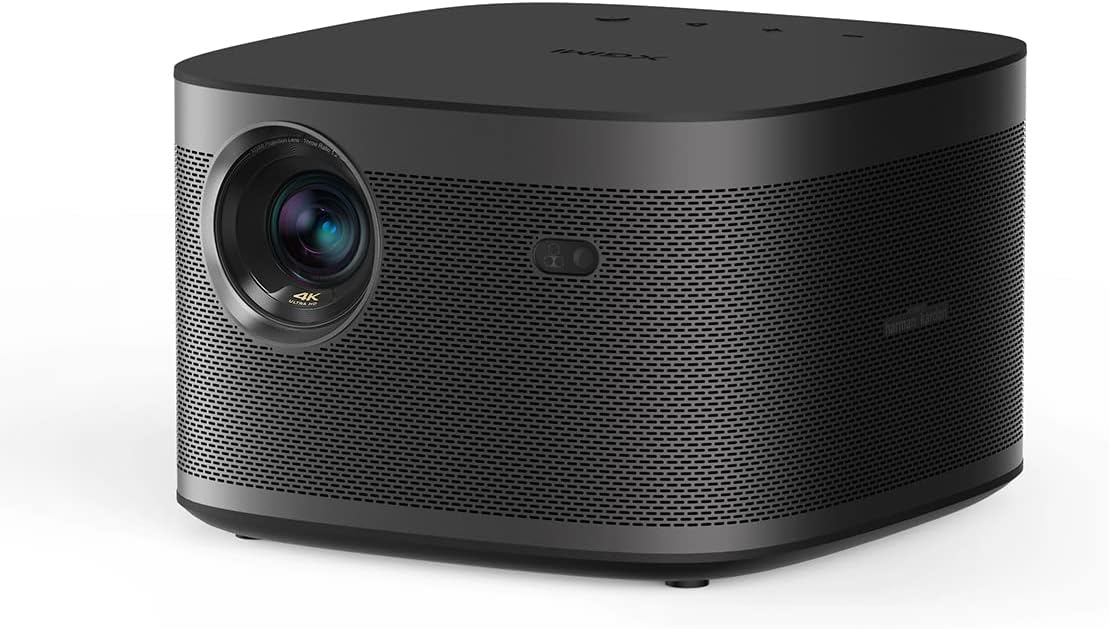
XGIMI Horizon Pro 4K Projector
XGIMI · $899
4.0 (747 reviews)
Buyers who want the cheapest way into a 4K-capable projector with built-in audio
What We Like
- By far the largest review sample of the five at 747 ratings
- Integrated Harman Kardon speakers avoid a separate sound system
- Lowest price of the group at $899
Could Be Better
- 1,500 ISO lumens is the dimmest brightness spec of the five, so it wants a dark room
- 4K here is pixel-shifted, not a native 4K imaging chip
Key Specs
The Horizon Pro is the least expensive projector in this comparison and carries by far the largest review count, making it the safest budget bet even though it is the dimmest.
See price at AmazonProduct Comparison
| Product | Price | Rating | Reviews | Best For | Buy |
|---|---|---|---|---|---|
| Epson Home Cinema LS11000 4K PRO-UHD Laser Projector Epson | $4,399.99 | 4.3 | 4.3 (131) | Buyers who want the brightest, sharpest laser image and don't mind the 4K/8K price tag | Amazon |
| Epson Home Cinema 4010 4K PRO-UHD 3-Chip 3LCD Projector Epson | $2,499 | 4.5 | 4.5 (291) | Buyers who want Epson's 3-chip color accuracy without paying laser prices | Amazon |
| Optoma UHD50X True 4K UHD Projector Optoma | $1,322 | 3.7 | 3.7 (490) | Buyers who want true 4K UHD and gaming-friendly response time at a mid-range price | Amazon |
| AWOL VISION LTV-3000 Pro 4K UST Triple Laser Projector AWOL VISION | $1,899 | 4.5 | 4.5 (198) | Buyers who want a flagship-style laser projector without a ceiling mount | Amazon |
| XGIMI Horizon Pro 4K Projector XGIMI | $899 | 4.0 | 4.0 (747) | Buyers who want the cheapest way into a 4K-capable projector with built-in audio | Amazon |
More Reviews
Get price-drop alerts and new guides from Home Theater Picks
One email a week: price drops on the gear we recommend, new guides, and what changed. No spam, unsubscribe anytime.